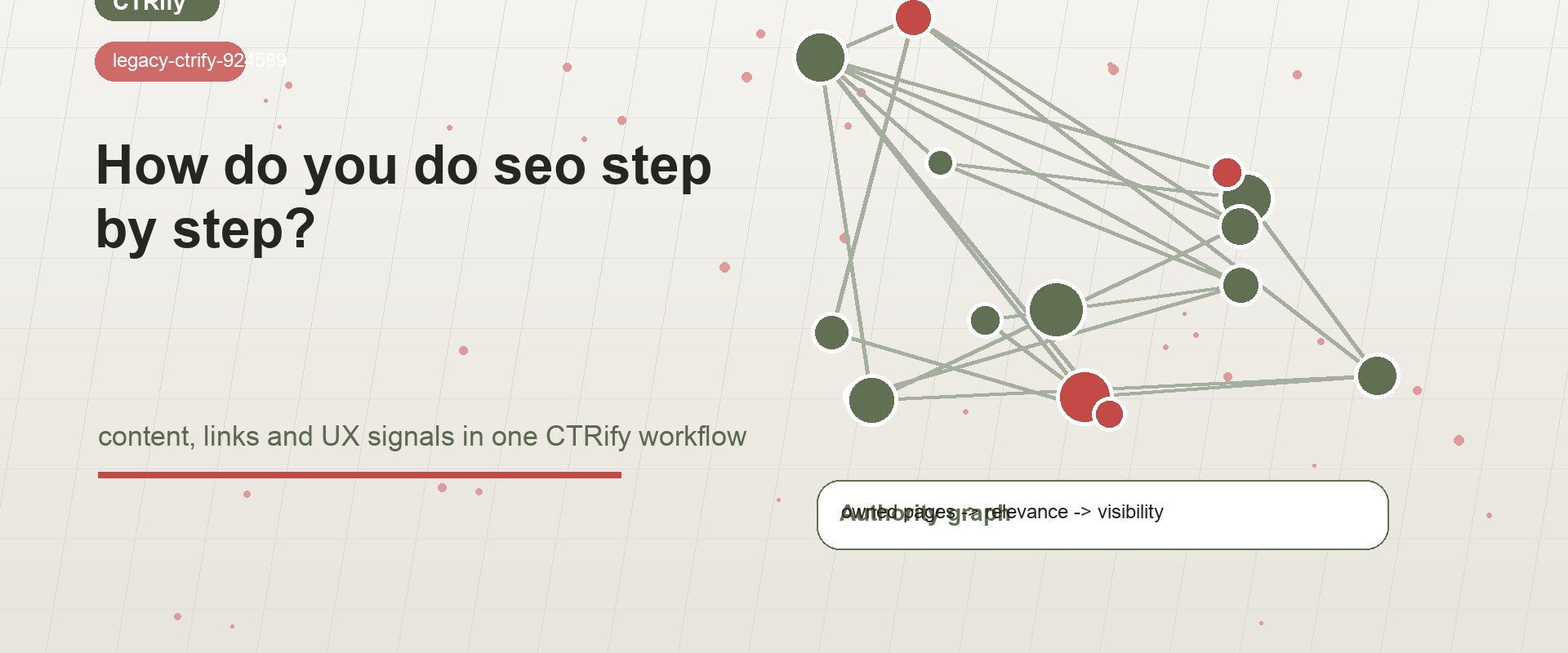
How To Do SEO Step By Step
SEO starts with one clear question: which search demand should the website win? The answer cannot be vague. A professional SEO workflow starts with a keyword, turns that keyword into a site structure, publishes pages that satisfy intent, connects those pages with internal links, measures performance and improves the right URLs with data.
CTRify turns that workflow into a product. CTRify creates a perfect SEO website from the starting keyword. That keyword becomes the center of the page architecture, content plan, internal linking logic and first metadata layer. When Auto SEO is activated with Google Search Console data, the website improves progressively through cannibalization cleanup, new interlinking, article upgrades, metadata improvements and URL-level SEO decisions.
Step 1: Choose The Starting Keyword
The starting keyword is the commercial center of the SEO project. It can be a service, product, location, niche or buying-intent phrase. Examples include local SEO agency, emergency plumber in Miami, AI SEO software, roofing contractor near me or ecommerce SEO tool.
This keyword sets the direction. It tells the SEO team what market the site should attack, what pages need to exist and which URL should become the main ranking asset. Without this step, SEO becomes a loose list of blog posts. With it, SEO becomes a controlled acquisition system.
Step 2: Build The Website Structure
After the keyword is chosen, the next step is page architecture. A strong SEO site needs a main landing page, supporting articles, related service pages, local pages when needed and internal links that move authority toward the main URL.
CTRify builds this structure from the starting keyword. The goal is to launch with perfect SEO from the first version, not to publish random pages and repair the mess later. A clear structure helps Google understand which page should rank for which intent.
Step 3: Map Search Intent To URLs
Every keyword has intent. Some users want to buy, some want to compare, some want a tutorial, and some need a local provider. SEO works when each intent has the correct URL type.
A commercial intent keyword needs a landing page. A question needs an article. A location query needs a local page. A comparison query needs a page that helps the user choose. This is where professional human SEO judgment matters. The page must match the search, not just mention the keyword.
Step 4: Write Content That Does A Job
Content should not be written just to fill space. Each article and landing page needs a job. It should answer the search, support the business goal and connect to other URLs in the site.
For example, a guide about how to do SEO step by step can support pages about on-page SEO, local SEO, Auto SEO, SEO tools and content optimization. The page should explain the workflow and send users toward the next useful page. That is how content becomes part of the SEO system.
Step 5: Handle On-Page SEO
On-page SEO includes the title tag, H1, headings, meta description, body content, image signals, schema, internal links and URL focus. These elements tell Google what the page is about and help users decide whether the page deserves attention.
CTRify builds these elements into the first website version. The title and metadata are not afterthoughts. The headings are not decorative. The internal links are not random. Each piece helps the URL compete in search.
Step 6: Connect Internal Links
Internal links are one of the strongest step-by-step SEO moves because they make the site work as a system. A supporting article should link to the main landing page. A service page should link to relevant explanations. A local page should connect to the service it sells.
Auto SEO can create new interlinking when Search Console data shows that a page needs more support. This is critical because internal links change how authority flows through the site and which URLs Google sees as central.
Step 7: Measure With Google Search Console
Once pages are live, the next step is measurement. Google Search Console shows impressions, clicks, CTR, queries and page movement. This data reveals which pages are gaining visibility, which pages need stronger metadata and which queries deserve article upgrades.
CTRify uses this data through Auto SEO. When activated, Auto SEO reads performance signals and turns them into improvement actions. That means the site does not stay static after launch. It keeps getting sharper as real search data arrives.
Step 8: Improve The Right URLs
The final step is ongoing improvement. Strong SEO teams do not rewrite everything at random. They improve the URLs with the highest value, clearest opportunity and strongest data.
Auto SEO supports that process through cannibalization cleanup, new interlinking, article upgrades, metadata improvements and URL-level SEO decisions. If two pages compete for the same query, Auto SEO helps clean the overlap. If one page gets impressions but weak clicks, metadata can be improved. If a query is growing, the article can be upgraded. If a page needs more support, internal links can be added.
That is SEO step by step: start with the right keyword, build a perfect SEO website, publish focused pages, connect them with internal links, measure with GSC and improve the right URLs with evidence. CTRify makes the workflow faster, cleaner and more commercial from the first keyword to the next optimization cycle.