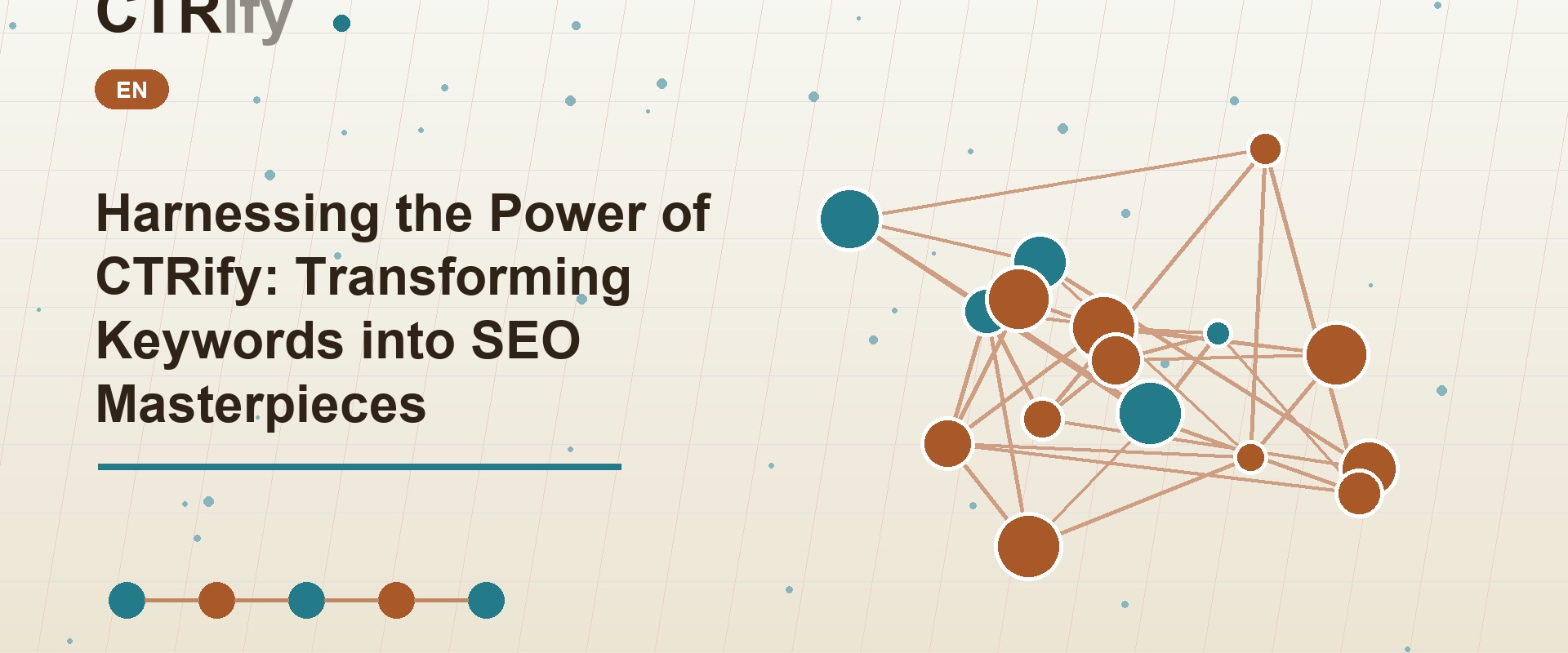
In the world of SEO, keywords are often viewed as mere prompts for content creation. However, CTRify takes a revolutionary approach by treating a keyword as the foundation for an intricate SEO map. This is where the journey begins. CTRify's AI delves deep into the topic, analyzing the intent behind the keyword, identifying related questions, and constructing the essential architecture for a robust SEO campaign.
Unlike conventional methods that may lead to generic content, CTRify ensures that each keyword evolves into a valuable asset capable of ranking, supporting additional URLs, and generating measurable signals. This is not just about producing random articles; it's about creating a roadmap that aligns with both Google’s algorithms and user expectations.
The Seed Keyword: Setting the Course
The initial step in CTRify's process is identifying the seed keyword. This can range from niche topics and product categories to local services or commercial SEO terms. For instance, a seed keyword like “lure fishing” opens the door to a wealth of related subjects, such as gear, techniques, species, and buyer questions. Conversely, “AI SEO software” points to aspects like rankings, semantic backlinks, and user experience signals. The seed keyword paves the way, while the surrounding searches add depth to the campaign.
Intent: The Cornerstone of Content
Before any content is crafted, understanding user intent is paramount. Searches can be informational, commercial, or comparison-based, and CTRify prioritizes intent to ensure that each page addresses the right question and targets the appropriate audience. For example, the query “best lure for bass at night” serves a different purpose than “history of lure fishing.” The former is aimed at supporting a product page, while the latter provides topical depth without a direct commercial opportunity. By distinguishing these angles, CTRify prevents the SEO team from misallocating resources on low-intent content clusters.
Entities and Questions: Building the Topic Framework
Google’s understanding of content extends beyond mere keywords; it encompasses entities, relationships, and contextual relevance. CTRify identifies critical names, concepts, subtopics, and pertinent questions that enrich the keyword’s narrative. For instance, in the realm of lure fishing, associated entities might include soft plastics, crankbaits, and seasonal tactics. In the context of AI SEO, relevant entities could involve Search Console, indexing, and UX signals. These entities not only inspire article ideas and FAQ sections but also help in structuring internal links, allowing Google to comprehend why a particular URL deserves visibility in search results.
Long-Tail Keywords: Early Wins for SEO
Effective SEO strategies often begin with long-tail keywords rather than attempting to rank for the most competitive terms right away. CTRify leverages its keyword map to uncover related phrases that present lower barriers to entry. These long-tail pages can generate impressions, clicks, and valuable ranking data while the primary page builds authority. This pragmatic approach allows SEO teams to monitor Search Console for impressions on related queries, indicating that the campaign is gaining traction. As data emerges, CTRify can refine strategies, optimize titles, and enhance internal links to strengthen authority on key pages.
Clusters and Semantic Links: From Research to Action
The true value of the keyword learning process is realized when it translates into a coherent structure. CTRify can convert mapped questions and entities into article clusters, with each piece addressing a specific angle of the topic. Semantic internal links tie these articles together, providing clearer support for the main page. This approach enables the SEO team to build backlink sources around the same topic, ensuring that the target URL garners relevant authority instead of random links. This distinction between mere keyword research and actionable SEO execution is crucial; a spreadsheet of terms alone cannot drive rankings. A well-connected cluster, enriched with content, links, metadata, and behavioral signals, is what propels success.
Search Console: The Feedback Loop
Once content is published, the SEO team must actively monitor Search Console. Impressions reveal whether Google is testing the content, while click-through rates indicate whether the snippet is capturing user interest. Indexation status shows if the support structure is being recognized, and ranking movements highlight which pages require additional authority or improved internal links. The keyword map not only serves as a guide for content creation but also functions as a dynamic tool for ongoing optimization, ensuring that the website remains agile and responsive to search engine changes.
In conclusion, CTRify doesn’t just create content; it constructs a comprehensive SEO framework from a single keyword. By understanding intent, leveraging entities, and utilizing long-tail keywords, CTRify empowers SEO teams to build a scalable and effective online presence. With Auto SEO, continuous improvements can be made based on real-time data from Google Search Console, ensuring that each keyword evolves into a powerful, structured asset in the digital landscape.