CTRify focuses SEO on the landing page, search queries, and lead conversions like calls or forms, plus tracking follow-up data. It skips general traffic goals. You choose the lead type, create a conversion page, back it with targeted content and semantic links, then use UX signals to improve clicks and engagement on pages that rank. For US lead sellers, local brokers, clinics, agencies, or niche directories, campaigns follow this lead route: query, landing page, proof, call or click, and measurement. CTRify builds assets, strengthens URLs, and tests user behavior without separating SEO from lead metrics.
What should a lead generation business build first?
The first step is a page designed to convert searchers into calls, forms, or qualified leads. This means a service-area page, vertical landing page, comparison page, or quote request page. Without that core conversion page, backlinks, UX signals, and traffic campaigns lack a stable focus. CTRify starts with the offer page, not content hubs or blogs.
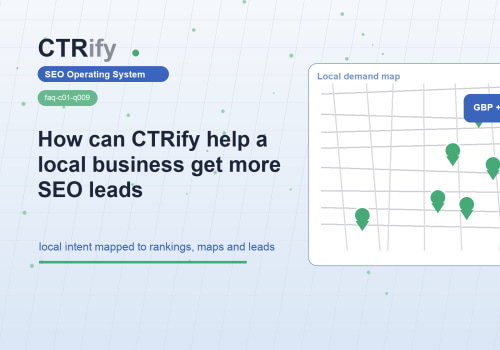
For example, a US roofing lead seller can’t depend on generic roofing articles. They need pages targeting roof replacement, emergency repairs, storm damage, city-service combos, and qualification questions. The Lead Route Framework is Offer, Location, Proof, Action, Measure. CTRify builds these pages and supports them with internal links, AI sites, and semantic content that reinforce the lead path.
How can CTRify create SEO assets for lead routes?
CTRify creates SEO assets that answer buyer questions before the call: service pages, FAQ clusters, local support sites, AI-generated websites. These cover pricing, urgency, eligibility, service area, next steps after form submission, and business or lead buyer credibility.
One local real estate site got 80,047 pageviews from 42 posts. This is not guaranteed but shows why focused lead assets matter. A tight site or cluster collects demand effectively when offer, location, and support pages work together instead of scattering traffic across unrelated content.
When should CTRify use backlinks for lead generation?
Backlinks are added once the lead page answers the query well and needs more authority or context. If the page is thin or incomplete, link building is premature. If the page is solid but competes against directories, marketplaces, or big brands, CTRify builds support articles and semantic backlinks pointing directly to the lead URL that should get calls or forms.
A legal lead page targeting “personal injury lawyer leads in Texas” or a service page for “water damage restoration calls” needs relevant, precise support—not random homepage links. CTRify uses owned AI sites, support content, and the External Links Manager to match anchors, topics, and destinations with campaign goals.
When do UX Signals help increase calls or forms?
UX signals help when the page ranks and gets impressions but has low clicks, calls, or form submits. Search Console data showing impressions with positions near page one but weak CTR indicates a behavior bottleneck. Then you improve page titles, trust proof, phone placement, and keyword-URL alignment before running UX Signals or manual CTR tests.
UX campaigns have moved average position from 5.59 to 1.98 across 457 keywords in real cases. This is operational data, not a guarantee. For lead campaigns, qualification matters: run UX/CTR tests only on visible pages and measure queries and conversions before and after.
What should a lead business measure?
Measure impressions, clicks, CTR, average position, call clicks, form starts, booked calls, accepted leads, cost per qualified lead, indexed support pages, and links created. Traffic alone doesn’t work—unqualified demand wastes budget. CTRify ties SEO directly to lead quality and page economics.
The report tracks the lead route: offer, location, URL, query group, CTRify action, date, measured signal, and next bottleneck. New pages get indexation and impression checks. Support links get placement and movement tracked. UX tests get CTR and lead actions measured. This keeps SEO accountable to calls and forms.
What should a lead business do next?
Pick one lead type and one landing page. If it’s missing or weak, build it with CTRify and add support content. If it exists but lacks authority, add semantic support assets and links. If it ranks but doesn’t convert enough, test UX Signals. CTRify works when every SEO action ties to a lead route, a URL, and measurable conversions.