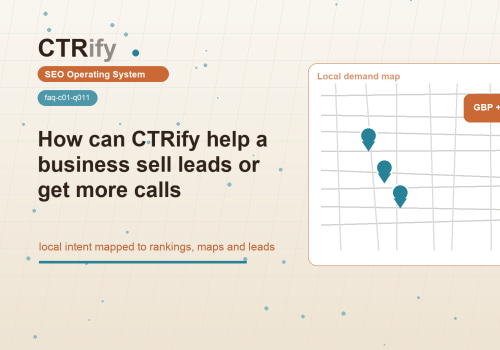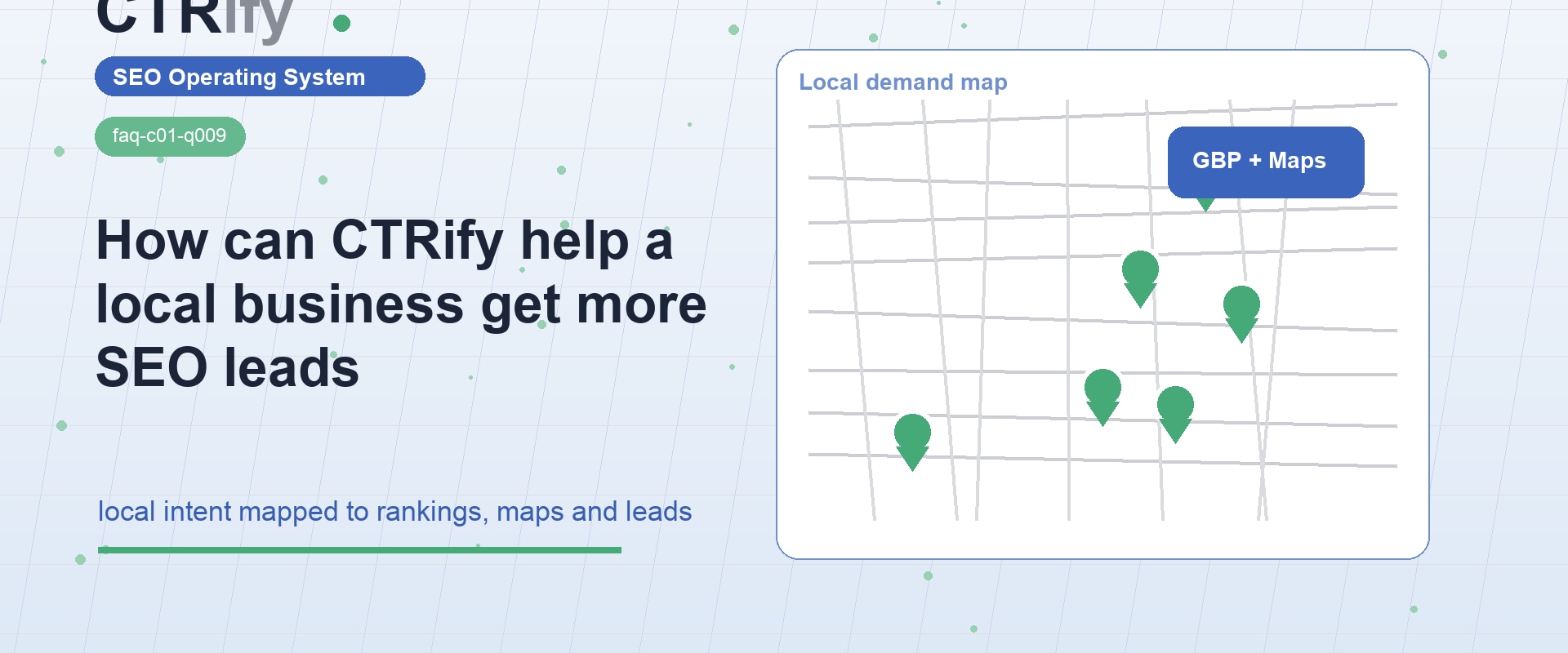
CTRify works by targeting specific service and city page combinations that drive leads, calls, and booked jobs. We don’t just push more content. Instead, we find the exact page and location that generate revenue. Then we optimize or create local service pages, add AI-generated support sites for neighborhoods or services, build internal links, and create backlinks pointing directly to the URL that converts. If a business already ranks on Google or Maps, we improve UX signals to increase click-through rates and conversions. For plumbers, dentists, roofers, med spas, lawyers, or contractors, the goal is to get the right page ranking, boost CTR, and make calls or forms easy to complete. CTRify works best when each local SEO campaign focuses on one location, service, URL, and clear measurement.
What local SEO gap does CTRify fix first?
CTRify fixes the gap between local search demand and the actual converting page. Many local businesses have a homepage, a Google Business Profile, and a few weak service pages but lack a dedicated landing page for queries like “emergency plumber Dallas,” “roof repair Phoenix,” or “dental implants Tampa.” We find the missing service-location page and decide what to do next: improve content, add local support pages, build backlinks, enhance UX, or improve tracking.
For US home service and healthcare businesses, we use the Local Revenue Page Framework: Service, City, Proof, Action. Service matches customer intent. City targets local search. Proof includes reviews, photos, or case info. Action covers calls, forms, or bookings. CTRify builds these pages and backs them with backlinks instead of wasting effort on generic blog posts that don’t convert.
How does CTRify build local pages and support assets?
We use AI Websites, SEO Machine, and focused content workflows based on services and locations. Local businesses need a main service page, city-specific versions, FAQs, support posts, and internal links connecting these. The page must serve real user intent, not just be a spun template stuffed with city names.
One local real estate project got 80,047 pageviews from 42 posts. Results vary, but this shows how focused local assets with solid page structure and internal linking increase traffic. CTRify lets businesses or agencies control the city, service, anchor text, and CTA for each page.
When should a local business use CTRify backlinks?
Backlinks help when the target service page ranks but needs more authority and context. Links must point to the converting page, not just the homepage. Anchor text, support articles, and target URLs must match the service-location the business wants to rank for.
For example, an HVAC company with a good “AC repair Austin” page might add support content on repair symptoms, emergency service, maintenance, and local neighborhoods. CTRify uses owned support pages and the External Links Manager to reinforce that page. This works better than buying generic directory links unrelated to the exact service page.
When do UX Signals or GBP-style campaigns make sense?
UX Signals apply when a business ranks in search or Maps but has low clicks or engagement. If Search Console shows impressions with low CTR or the Google Business Profile gets views but few calls, it’s time to optimize titles, page content, local proof, and run behavioral tests. If the page isn’t ranking yet, UX signals won’t help.
We’ve tracked UX campaigns improving average rankings from 5.59 to 1.98 across 457 keywords. This requires clear keyword-to-URL mapping and measurable results. The same principle applies to GBP/Maps campaigns: start with a real service area, a real page, and measurable leads or calls.
What should a local business measure?
Track calls, form submissions, bookings, route clicks, GBP interactions, service-page impressions, CTR, average position, indexed pages, and support links. Rankings alone don’t generate revenue. CTRify ties SEO actions directly to lead paths the owner can monitor.
The best report logs service, city, URL, action taken, date, signal measured, and next bottleneck. Published a city page? Check indexation and impressions. Added support links? Track placements and rankings over time. Ran UX Signals? Monitor CTR and call behavior. CTRify works best when local SEO is a set of trackable, actionable steps.
What should a local business do next?
Focus on one service and one city before spreading resources. No dedicated local page? Build it first. Have the page but missing context? Add support content and semantic links. Visible but low clicks or calls? Run UX Signals tests. CTRify helps local businesses when every SEO move links to a service, location, URL, and lead metric that matters.