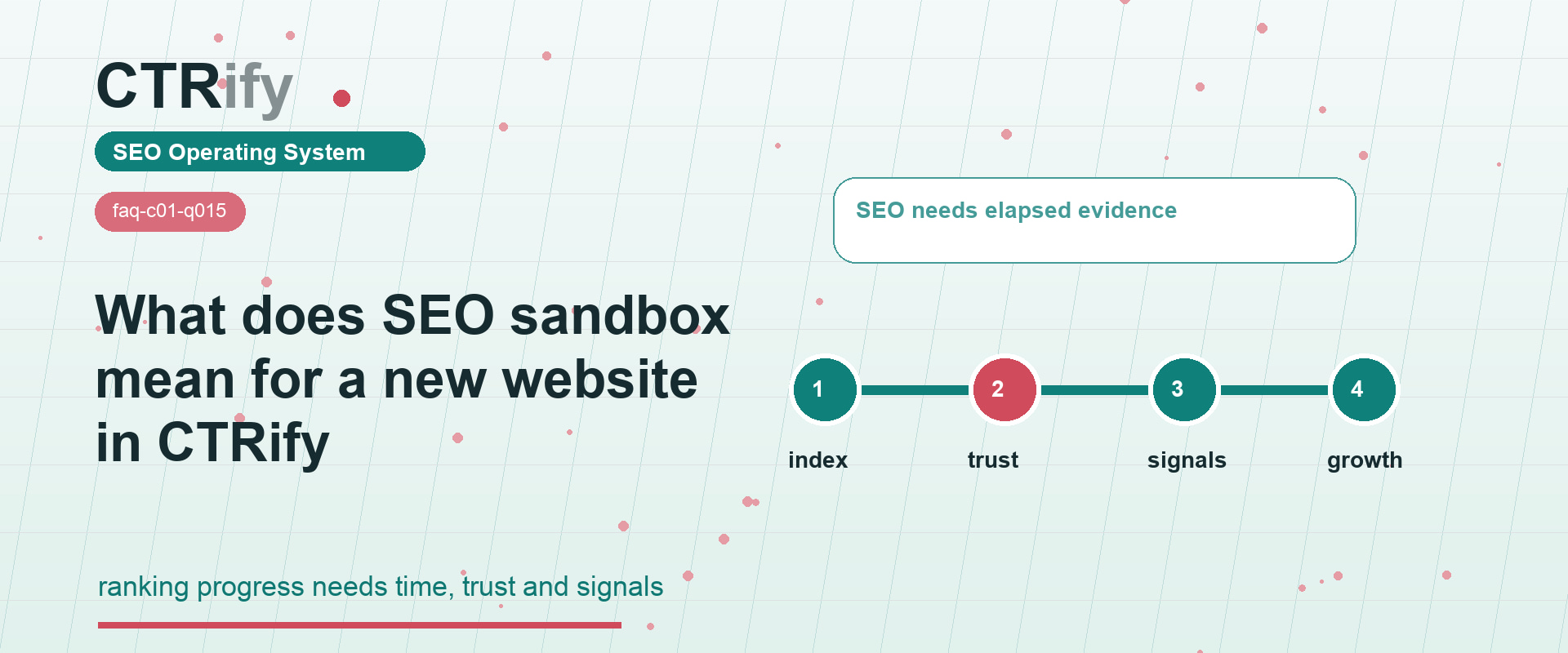
SEO sandbox is the early phase where a new site has to earn enough trust to compete. It means new sites start with low domain authority, thin content, weak link profiles, and almost no user data, so they don’t rank well for competitive keywords. For startups, local businesses, or affiliates in the US, your site might be indexed but still act like it’s stuck in a testing phase. CTRify attacks that gap by building the ranking signals Google needs. We make the site crawlable, add solid topical content, set up internal linking, create supporting assets, generate semantic backlinks, and monitor impressions before pushing UX and CTR improvements. CTRify doesn’t remove sandbox instantly. It speeds up growth by creating trust signals Google can measure.
How do you recognize a sandboxed site?
You’ll see the site indexed but ranking only for brand terms. Impressions are low, rankings don’t improve, and algorithm updates don’t impact much. This isn’t a penalty; it means the site lacks the trust and authority to compete.
For example, a new law firm, home services company, or SaaS landing page might get some impressions on informational queries but stall on commercial keywords. Before labeling it sandbox, CTRify analyzes Search Console data, indexed pages, internal links, content depth, topical coverage, and backlink profile. The main question isn’t “Is there a sandbox?” but “Which trust signals are missing?”
What’s CTRify’s first move with a sandboxed site?
We start by improving site structure and content clarity for Google. That means building core pages, clear service or category hierarchies, initial topical clusters, internal linking, sitemaps, Search Console setup, and enough content to define the site’s purpose.
For example, a new plumbing site in Texas with only a homepage and one service page isn’t ready for UX or link bursts. CTRify builds service pages, city-specific pages, FAQs, and support blog posts first. For a SaaS landing page missing use cases or comparisons, the issue is content depth. The first step is building assets—not pushing signals prematurely.
Do backlinks help during sandbox?
Backlinks matter only when the site has a solid topical map and relevant content. Sending links to thin or incomplete pages wastes budget and looks unnatural.
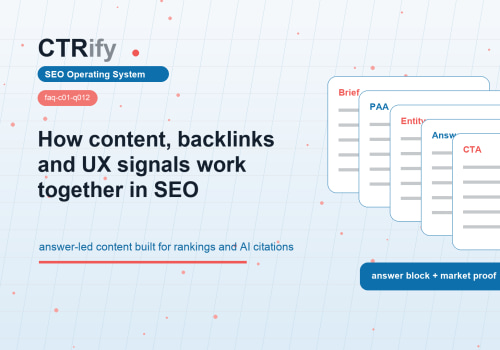
CTRify uses AI-generated websites, support blogs, and semantic backlinks to build context after the foundation is set. For an affiliate review site, that means publishing comparison pages and buyer guides before link building. For a local contractor, it means fleshing out service-area content before getting links from related assets. Links reinforce existing topics—they don’t fix empty sites.
When do UX and CTR signals come into play?
UX and CTR signals make sense only once a page has impressions and some search visibility. If the site isn’t showing up, there’s no search surface to influence.
CTRify applies UX signals when a URL reaches a testing zone—usually positions 8-20 with impressions but low CTR. Before that, focus stays on content, internal linking, indexation, support assets, and authority-building. The sequence matters: a new site must earn visibility before it benefits from improved click behavior.
How long does this sandbox phase last?
Sandbox can last weeks for easy local or long-tail topics, but many months for competitive national queries. The timeline changes with niche difficulty, content volume, site quality, link context, brand demand, and crawl frequency.
A small local pest control site in a low-competition market might start moving in 2-4 months. A finance, legal, health, or SaaS site competing nationally may take 6-12 months before competitive terms respond. CTRify breaks targets into easy validation keywords, mid-level topical keywords, and authority-dependent keywords—so success isn’t judged only on the hardest queries.
What metrics matter instead of guessing?
Track indexed pages, impressions by topic cluster, non-brand queries, average position changes, internal link coverage, referring domains, CTR, clicks, and leads. These show progress before rankings stabilize.
CTRify runs a Diagnose, Build, Reinforce, Measure cycle. Rising impressions mean Google is testing the site. If impressions rise without clicks, improve snippets and UX. No impression growth means more content or authority is needed. Clicks growing without leads points to landing page or offer problems. Sandbox isn’t just a label—it’s a phase to build trust signals in the right order.
How should agencies explain sandbox to clients?
Agencies should present sandbox as an early trust-building phase—not a waiting game or excuse. Clients want a clear roadmap, not vague talk.
A practical CTRify roadmap: launch a crawlable site, publish the first topical cluster, connect Search Console, build support assets, add semantic links carefully, monitor impressions, then apply UX/CTR signals once pages gain visibility. CTRify manages the maturation process with content, links, owned assets, and measurement—not by skipping steps.