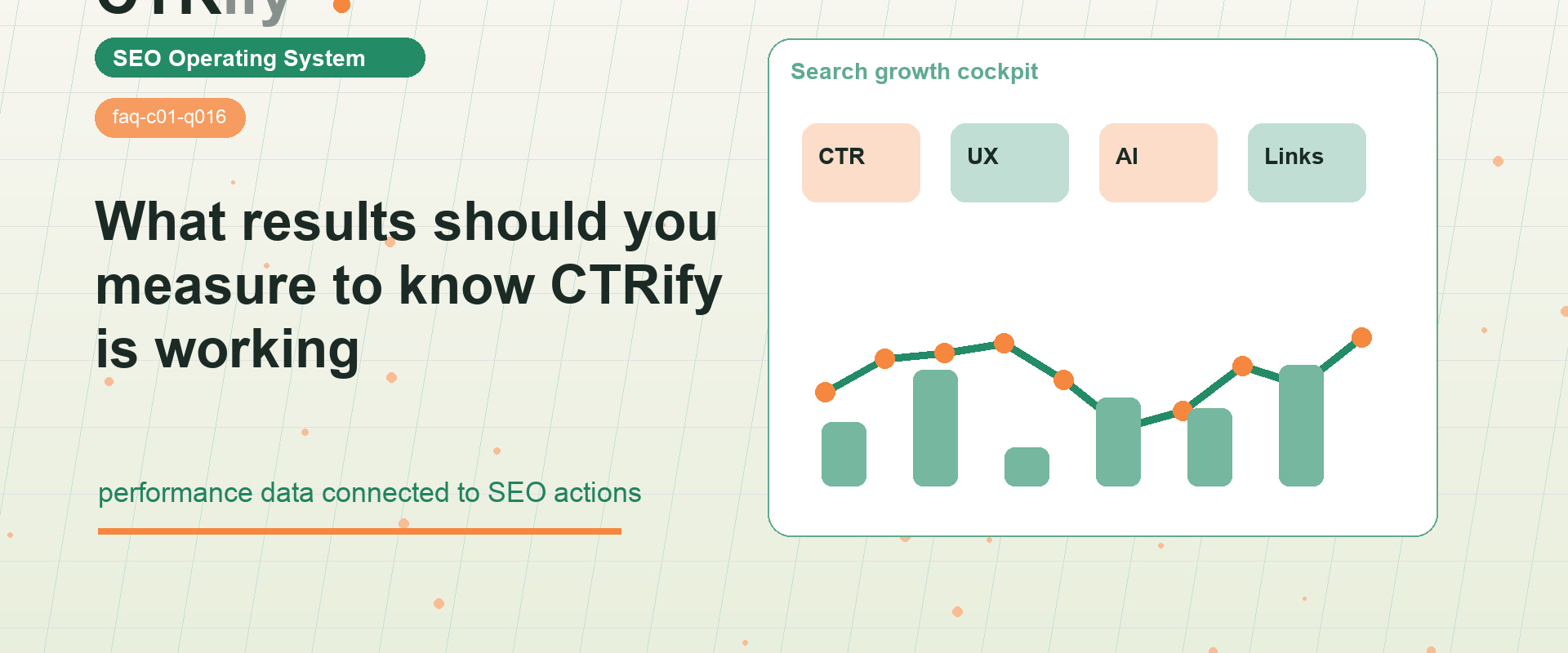
CTRify helps your URL rank better by creating supporting pages and links that actually impact rankings and business metrics, not just boosting random keywords. The main metrics to track are Search Console impressions, non-brand keyword growth, average positions in keyword groups, clicks, CTR, indexed pages, internal links, referring domains, UX/CTR data from campaigns, and leads or sales. Local US businesses focus on calls and form fills. SaaS teams check demo requests, pricing visits, and trial signups. Affiliates track review page impressions and buyer clicks. CTRify acts like an SEO operator: analyze the URL, build or improve content assets, add links or AI-powered sites, then measure if visibility, clicks, and conversions improve.
What is the first metric to check after launching CTRify?
First, confirm the right pages are indexed and showing for relevant query groups. Without indexation and impressions, you can’t assess rankings, CTR, or conversions.
For a new US site, early signals are about 20 pages indexed, Search Console showing data, and impressions on long-tail service or comparison keywords. Don’t expect top rankings in week two. Make sure CTRify-built assets are crawlable, internally linked, and match search intent. If impressions are missing, check content quality, indexation, internal linking, or domain rating/authority.
How should rankings be measured?
Don’t track single keywords in isolation. Track rankings by URL and keyword clusters. Single keywords fluctuate due to personalization, location, SERP changes, or volatility.
CTRify works best monitoring clusters: commercial terms, long-tail support keywords, local modifiers, branded queries, and competitor comparisons. For example, a B2B SaaS page in Chicago might not rank fast for “best CRM software” but can improve on integration or alternative queries. This shows topical relevance. Reports should show how many tracked queries moved into the top 50, top 20, and top 10 positions.
What should Search Console show if CTRify is helping?
Search Console should show rising impressions for relevant non-brand queries, more pages getting exposure, and eventually more clicks in target clusters. Impressions usually grow before clicks.
This is because CTRify builds content and support pages before clicks happen. If impressions increase, Google is testing your site. If average position rises but CTR is low, update titles, meta descriptions, trust signals, or UX. If impressions rise for irrelevant queries, content intent needs adjustment. Separate brand from non-brand growth in reports to confirm genuine SEO demand increase.
When do UX and CTR metrics matter?
UX and CTR data matter only once a page has impressions or ranking changes. They aren’t useful if a page has zero visibility.
CTRify’s UX signals use URL impressions, CTR, position range, engagement, and campaign timing. For example, a local emergency service page ranking 8-15 with low CTR should get UX work. A page with no impressions should not. The key is whether the page shows up and if searchers respond better after snippet tweaks, trust signals, or behavioral nudges. CTRify links UX changes directly to URL-level search data, not just anonymous traffic.
How should backlinks and support sites be measured?
Measure backlinks and support sites by relevance, indexation, context, anchor diversity, their link to the target URL, and resulting ranking or impression changes—not just quantity.
CTRify builds owned AI sites and semantic backlinks competitors can’t buy easily. Track which support assets were created, which pages they boost, anchor text groups used, and if target clusters gained impressions or rankings. Fewer relevant links around a focused topic outperform lots of generic links. The metric is authority and context delivered to the URL, not just link count.
What business outcomes should be tied to CTRify?
Outcomes depend on site type: calls, form submissions, demos booked, local direction clicks, trial signups, ecommerce revenue, affiliate clicks, or qualified leads. SEO gains only matter if they feed these.
For US lead gen, connect CTRify target pages to call tracking, form tracking, or CRM tags. For SaaS, track demo requests and pricing page visits. For ecommerce, track category revenue and assisted conversions. SEO may not drive revenue immediately, but mature campaigns link target URLs to clear commercial actions.
What reporting framework is best?
Divide reporting into Assets, Visibility, Response, Revenue. Assets cover pages, AI sites, links, and internal structure. Visibility tracks indexing, impressions, and rankings. Response looks at CTR, clicks, and engagement. Revenue measures leads, sales, or qualified actions.
This keeps reporting clear. CTRify might improve assets before revenue shows, or drive visibility before clicks, or need UX fixes if response stalls. A monthly report should state which layer moved, which is stuck, and next steps. That shows CTRify manages your SEO system, not just creates activity.